JSON
Indexing a MySQL JSON Field With a Generated Column
MySQL cannot index a JSON column directly. Add a generated column, index it, and learn the collation, NULL and cast traps that change query results.
8 min read
Everything you need to level up your coding skills.
MySQL cannot index a JSON column directly. Add a generated column, index it, and learn the collation, NULL and cast traps that change query results.
When the DuckDB CSV sniffer picks the wrong type, override it by column, read as text and cast, or narrow the candidate types. A test file shows each guess.

Fix field name is not valid, reference is not valid, fields that vanish after refresh, old items that stay, lost formatting and new rows that never appear.
Read every CSV in a folder as one table in DuckDB with a glob, add the file name as a column, and handle files whose columns differ in count or order.

A docx or xlsx is a zip of XML files. Open it with zipfile, read the paragraphs, runs and tables of a docx and the shared strings and cells of an xlsx.
Put shared settings in one anchored block and merge it into each service. The web service replaced the whole environment block, since the merge is shallow.
Use JSON_SET, JSON_REPLACE, JSON_REMOVE and array functions to change one part of a MySQL JSON column, with partial updates, binlog size and the counter trap.
Show values as percent of total in an Excel pivot, then write the same share in SQL with SUM OVER and avoid integer division and rounding traps.
How the DuckDB CSV sniffer picks delimiter, header and types, how to read its verdict with sniff_csv, and what breaks when a bad value sits past the sample.

A reference to the XML formats you meet in practice: how to recognize each by root and namespace, what to extract, and the trap each one carries.
The read_csv options that solve real problems in DuckDB 2.0, each on a file that needs it, including the nullstr trap that replaces the empty default.
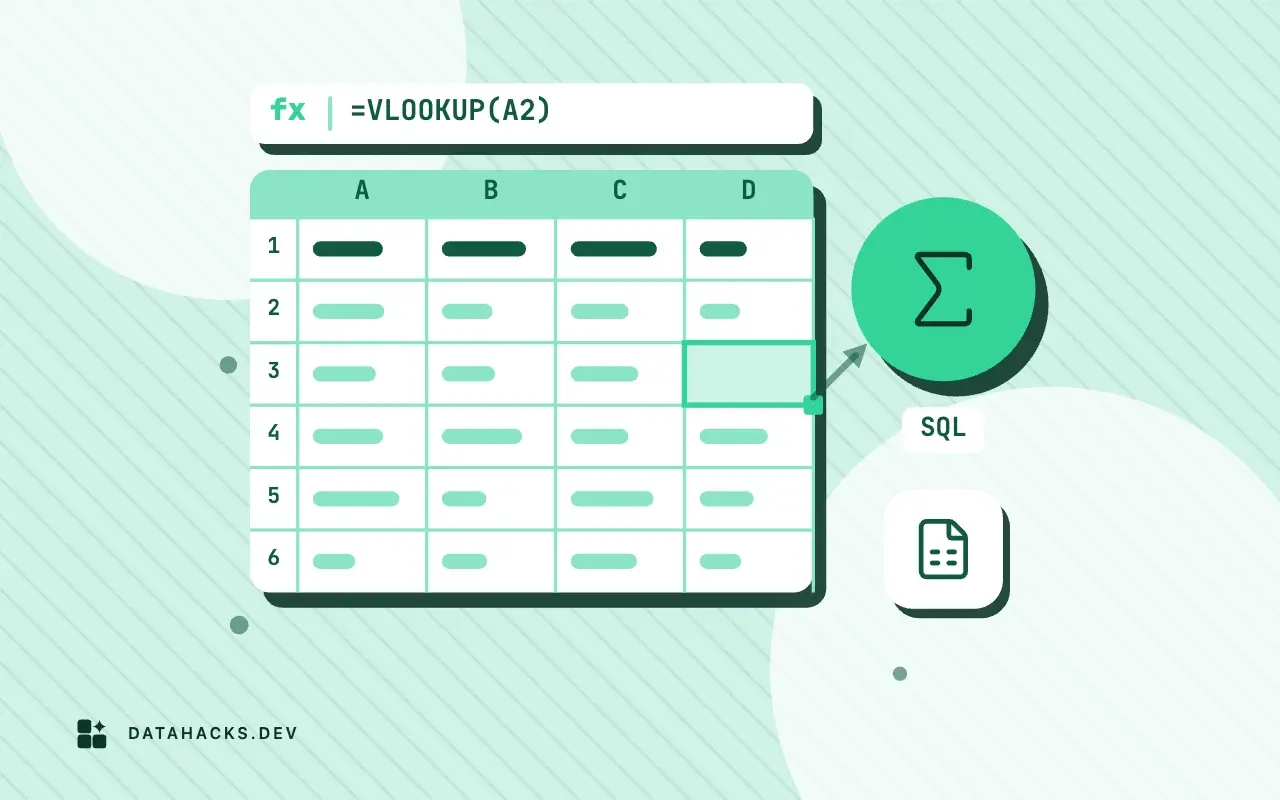
Turn a wide Excel sheet with a column per month into a long table: LATERAL VALUES in PostgreSQL, UNPIVOT or CROSS APPLY in SQL Server, UNION ALL in MySQL.
We send one email when a new article is published. No spam.